Monday, October 18, 2010

Put Out the Welcome Mat

More than a decade ago, experts took a look at the reasons why parents become involved—or not—in their children’s education. Researchers Kathleen Hoover-Dempsey and Howard Sandler narrowed their focus to these three key factors:

  • · How parents view their “job description,” including their responsibility for their children’s learning
  • · How confident parents feel about their ability to help their kids
  • · Whether parents feel invited and welcome at school.

That third factor is the one that educators have the greatest opportunity to influence. How welcoming does your school feel to parents? (Have you ever asked them?) When you communicate with families, do you tend to pass along announcements and due dates, or invite parents to be real partners in their children’s education?

I had a chance to discover some of the creative ways schools are connecting with families while researching new publication for Edutopia. Home-to-School Connections Guide: Tips, Tech Tools, and Strategies for Improving Family-to-School Communication is just out, and you can download a free copy here.

Many of the tips you’ll find here come from colleagues and other Edutopia community members who responded to my inquiries with a host of good ideas in blogs, online discussion groups, and on Twitter. (Tip #10 includes a nifty idea from Jane Krauss about how to connect parents with their kids’ learning.)

Clearly, schools are getting more creative about connecting with parents. The guide includes examples of how they’re using Facebook and other social media to open conversations with families. Some tips offer new takes on old-fashioned ideas, such as making reading a family affair. And, of course, many ideas come from the reporting that Edutopia has done about what works in public education.

How do you forge stronger partnerships with your parents? Please share your ideas, and we’ll keep growing this conversation.

Monday, October 11, 2010

Crying for Solutions

Several years back, when I was an editor at an educational research organization, we produced materials for a federal initiative to promote school safety. Among our most popular publications was a fact sheet on strategies to prevent bullying. The solutions seemed so straightforward: Don't ignore it. Create a climate of respect. Make it safe to ask for help.
Fast forward a decade or more, and bullying persists as an issue that just won't go away. Indeed, it continues to mutate as new technologies are harnessed for the hideous cause of attacking another person's humanity.
October is National Bullying Prevention Month. Scarcely a week in, we've seen headlines about a gang in New York that viciously attacked two teens and an adult male because they happen to be gay. We've heard a candidate for governor of the same state describe gay people as "disgusting." And then refuse to apologize for his bigotry. We've heard more reports about a New Jersey college student named Tyler Clementi who jumped off a bridge after his classmates used Twitter, a webcam, and YouTube to torment him by broadcasting details of his intimate life. (OK, that happened in September.)
Clearly, this is a problem that's still crying for solutions.
What can we do to make sure we don't continue to face the same problem in another decade? For starters, take a look at a project called Not In Our School. It grew out of an anti-hate campaign called Not In Our Town, which itself grew out of a documentary by the same name. (My recent Edutopia post includes more background.) Resources for schools include no-nonsense classroom materials and a social media campaign that encourages kids to create and share their own anti-bullying messages.
Can a campaign make a difference? Take a look at the Not in Our School videos from Gunn High in Palo Alto or Shaw High School in East Cleveland, Ohio, and see for yourself. Better yet, share them with your students. And get the conversation started.

Thursday, September 30, 2010

Tools for Infographics

The other day Suzie and I participated in an author talk with a special interest group for media specialists, ISTE's SIGMS. We touched on the topic of infographics and folks wanted to know what tools people use to make them.

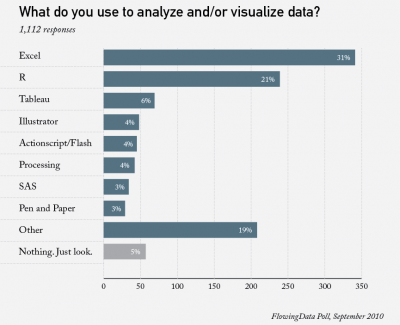
Wouldn't you know it, Flowing Data, the infographics site I recommended to the group, just polled their readers about their design tools and the results are here!


In addition to these I know student Michael Greenberg uses InDesign, and others recommend these:

Google Spreadsheets: http://www.google.com/googlespreadsheets/try_out.html

Science Pipes(for biodiversity data) http://sciencepipes.org/beta/home

Tableau Public: http://www.tableausoftware.com/public

Inkscape: http://inkscape.org

Glogster (for interactive poster-making): http://www.glogster.com


Have fun with infographics and tell us about your experiences with them!

Thursday, September 9, 2010

PBL, Information Literacy & Infographics

I just drafted a book chapter that includes a big treatment of infographics. I'm excited to share what I've learned and get your

<= (awesome)


thoughts on infographics and other means for building information literacy. What are your favorite resources, methods, and tips?


PBL, Information Literacy & Infographics
Please join me on September 16 at 5:00 p/6:00m/7:00c/8:00e on Elluminate. Here is the Learn Central link to the event.


Tuesday, September 7, 2010

This is an infographic and a puzzle


Is it possible to determine where this signpost is situated in the world?

...click for a close look...

Wouldn't this be a fun project? Share four of five photos of signposts from around the world and have groups of kids try to figure out where they are situated. You'd have to pick photos where the signs' locations are not identified!

from the Flickr Creative Commons, #signpost
...more thinking...
This might be a "jump off" activity for a community project. Find something distinctive about your town, relate it to others around the world, put up signs. (The little town of Florence, OR has sign posts to all the Florences in the world.) More ideas:
  • Origins: 1) Relate local settler or military hero statues to others, 2) Relate local commerce (mint growing in small towns in Oregon) to other regions with same commercial interest, 3) Get demographics of the area and make signs pointing to nations of origin.
  • Events: 1) Notable disasters: big flood, tornado, and so on, 2) Birthplaces (your town spawned Jay Leno, signposts point to birthplaces of other TV figures), 3) Your annual Berry Festival or Summer Jazz Jam isn't likely the only one going...
  • What would you add?

Tuesday, August 17, 2010

Jump-Start Your School Year


Just published and free to download, Edutopia's Back-to-School Guide is full of suggestions for incorporating new media into learning during the first weeks of school.
Thanks to all who shared suggestions, and please let me know about tools and tips to keep in mind for next year. Never too soon to plan ahead!

Monday, August 16, 2010

The Futures Channel


I just learned about The Futures Channel and am excited to share their films with teachers wanting to introduce their students to "Real Math, Real Science, Real Careers." Start with Aquarium Makers (click on pic) and see how passion, science and math combine to make the world more beautiful.

I can imagine using this video as a launching pad for a project where kids design an aquarium to fit a space in their school and actually have one built. What else would happen along the way? Lots of math and physics, design rendering (blue prints, sketchup), meetings with engineers, architects, expert aquarists and fabricators, charette protocols, pitches to the school board or parent group, a fund raising campaign and creation of a media kit. Think ninth or tenth graders could carry this off?